|
 |
|
| |

|
|
|

|
The Fading Away: Alzheimer's Disease
In the United States, about 7.2 million adults age 65 and older are living with Alzheimer’s disease as of 2025. The illness is a progressive neurodegenerative disorder that slowly destroys brain cells, leading to worsening memory loss, cognitive decline, and a steady decline in the ability to function independently. But Alzheimer’s does not affect only the person diagnosed. Yet the disease extends far beyond the individual diagnosed with it. Families are drawn into a slow and often overwhelming transformation of daily life. Spouses, children, and relatives increasingly become caregivers, assuming responsibilities that grow heavier as the illness advances. What begins as small acts of support can evolve into round-the-clock care that is physically demanding, emotionally draining, and frequently isolating. This issue examines the far-reaching impact of Alzheimer’s—both on those living with the disease and on the families whose lives are reshaped by the long and difficult path of caregiving.
|
|
|

|
The Gift of Sight
India has the highest population of blind people in the world. This issue looks at the Indian government’s attempt to confront the problem by creating mobile eye care centers known as Cataract Camps and the help and intervention of the international organization, Project Orbis. Orbis has converted an airplane into a traveling eye hospital and education center. Their humanitarian efforts teach doctors, nurses and technicians - around the world - the newest advances in surgery, technology, and healthcare.
|
|
|

|
Incarceration: America's Dark Underbelly
The United States has more people in its prisons than any other country in the world. Every day, there are over two million people in America’s jails. The recidivism rate is at around 68 percent. That means those individuals will be back in prison within three years after release. The annual cost is over 80 billion dollars. It is a matter that needs to be addressed, and programs need to be established to rehabilitate and create a positive transition back into society. This magazine issue examines the situation and programs that have produced positive results.
|
|
|
|
Angola: A Struggle to Survive
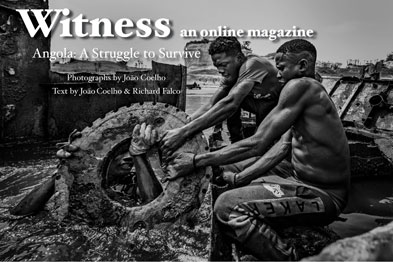
This issue focuses on the story of a group of men struggling to survive in Angola. Angola has been torn apart by violence, war, and corruption since its independence in 1975. When the civil war finally ended, over one million people were killed, another 4 million were displaced, and some 70,000 lost limbs from brutal terror tactics, torture, and intimidation, almost two-thirds of Angolans lacked access to drinking water, and the infant death toll rose drastically. Though rich in natural resources which could make it one of the largest economies in the world, most Angolans live on less than $2.00 a day.
During the conflict, a graveyard of scuttled ships began to appear along the coast about forty kilometers from Luanda. For decades they have lain rotting in the waters. Today, you will find, a group of men who swim out to these hulks scavenging for iron scrap. The work is dangerous and exhausting. Their efforts represent a microcosm of the daily struggle for life in a country where there are few alternatives and corruption is rampant.
|
|
|
|
The
African Refugee Crisis - Drought, Famine, War
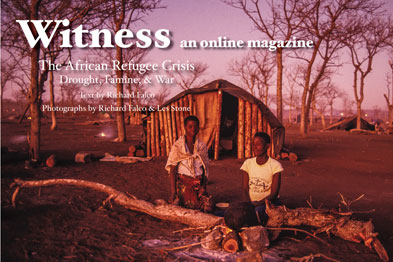
This issue takes a comprehensive look at the refugee situation in Africa. The focus is on the reasons this situation has evolved and remains unresolved. In addition to the living conditions at the camps, the story examines the numbers and locations where these refugees have settled. It also highlights the turmoil and violence that cause this extremely high movement of refugees and displaced persons. The report provides insights into the resulting wars and internal conflicts, and the exploitation of natural resources (such as diamonds, oil, coltan, and others) that fuel and finance these conflicts.
|
|
|

|
Submerged Conscience: The Impact of Climate Change on the Great Barrier Reef
Australia’s Great Barrier Reef is the largest complex of coral reefs in the world today. However,coral reefs are rapidly degrading due to multiple pressures such as climate change, overfishing, and pollution. In an era of rapid environmental shifts, social changes, and unprecedented economic development, the need for relevant research on the effect of climate change on the environment has never been greater or more urgent. In order to fight these effects, different marine authorities are conducting research and experiments with the aim of finding a solution for the protection and safeguarding of the reefs of the world. This story looks at the issues and actions concerning the survival of the reef.
|
|
|
|
Prison Arts
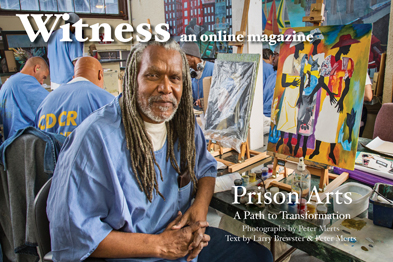
Everyday there are over 2 million individuals in U. S. jails, the highest incarceration rate in the world. For many decades in the United States, punishment and imprisonment were favored over rehabilitation and non-carceral alternatives. The “tough on crime” mantra is beginning to subside, as the escalating cost of building and operating penal facilities has opened the minds of citizens and lawmakers to sentencing and prison reforms. Many people are asking whether alternatives exist. California has led the way with innovative arts programs. Evaluation of prison arts programs consistently shows that significant, positive, and persistent life changes happen for the vast majority of men and women who participate. Arts programs offer prisoners the opportunity to serve their time with purpose and heighten motivation to pursue additional educational and vocational programs in order to better prepare for productive post-incarceration lives.
|
|
|

|
Tuberculosis: Scourge of a Silent Killer
Tuberculosis is one of the deadliest diseases on the planet. Its resurgence has caused
great concern within the medical community. For many years, tuberculosis was in a slow
decline. The World Health Organization (WHO) published a new report on tuberculosis
revealing that approximately 10.8 million people were newly diagnosed with TB in 2023
– the highest number recorded since WHO began global TB monitoring in 1995. Of this
number, 1.6 million people died, placing TB again as the leading infectious disease killer
in 2023, surpassing COVID-19. The report also found an increase in drug-resistant
cases. In the United States, the Centers for Disease Control and Prevention (CDC)
reported a rise in tuberculosis by sixteen percent. Governments and medical
organizations worldwide are looking at ways to combat the surge. Several programs are
proving effective.
|
|
|
|
The Price Of Oil
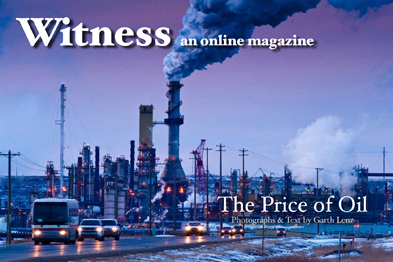
Today, humanity must balance decisions regarding industrial needs and economic growth with their environmental and ecological impact. Situated in the heart of the largest and most intact forest in the world - Canada’s boreal forest – is the world’s largest energy project. The Alberta tar sands are the largest proven oil reserves on the planet, outside of Saudi Arabia and Venezuela and represent 10% of technically recoverable global oil reserves. Trapped underneath the boreal forest and wetlands of northern Alberta are vast reserves of sticky, tar-like bitumen, the mining and exploitation of which is creating devastation on a scale that the planet has never seen before. Looking at the images of the Alberta Tar Sands, the viewer can only be shocked by what they see. The photographs document the situation in a way that provides insights and understanding, but more importantly demand action. Any further delay in decisions related to the issue of tar sands oil production places at risk not only the Canadian economy and boreal ecosystems, but constitutes a threat to global climate stability.
|
|
|
|
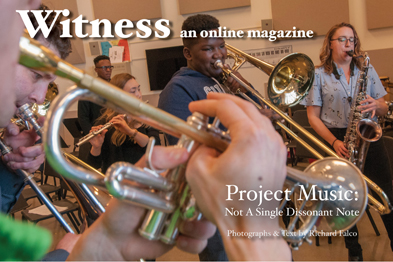
Project Music: Not A Single Dissonant Note
Project Music is an intensive after-school music education program for inner-city children. It is the brain-child of the jazz pianist and educator, Joyce DiCamillo. DiCamillo became concerned that inner-city children from economically deprived areas did not have access to the arts and particularly, music. The program takes inspiration from the El Sistema model. El Sistema was founded by José Antonio Abreu in 1975 to help impoverished Venezuelan children learn to play musical instruments and be part of an orchestra. Over the next four decades, El Sistema become a worldwide network of youth orchestras, choirs and music centers. The program provides a free music education. In addition to music, it’s goal is to cultivate fundamental life skills such as self-expression, cooperative learning, discipline, leadership, and creativity— all of which have been linked to improved social and academic outcomes. The program has had an important impact on the community and provides a positive alternative for impoverished children who have few other resources.
|
|
|
|
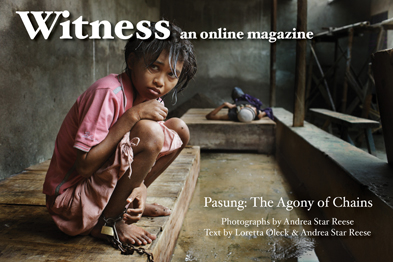
Pasung: The Agony Of Chains
Every day thousands of mentally ill people are locked away in rooms, cells, cages, or animal sheds, restrained in chains or wooden stocks. Many are left naked, hungry, with no ability to wash, and vulnerable to malnutrition, assault, and rape. In Indonesia, this form of abusive “treatment” is called pasung. Condemned by Human Rights Organizations around the world, the practice continues unabated. Although pasung has been banned by the government since 1977, it continues to be the widespread traditional response to mental disorders throughout Indonesia. This story takes an in depth look at the situation and exposes the horrific conditions that these patient endure.
|
|
|
|
|
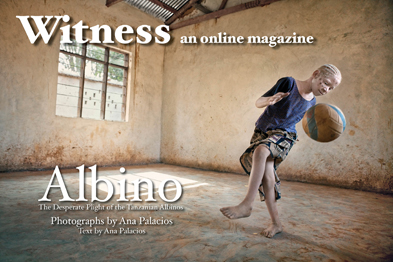
Albino: The Desperate Plight of the Tanzanian Albinos
Albinism is a deadly serious matter for those who suffer from it in Africa. An affected person’s skin has little or no melanin making them extremely vulnerable to the harsh effects of the sun. This condition can lead to skin cancer and blindness and other medical complications. They are the victims of serious social discrimination. There is little awareness that albinism is a genetic condition. This ignorance creates myths and superstitions of all kinds. Some think they are the children of the devil or that the mother had been with a white man. For many Africans a ‘white’ child is a stigma for the family: they are cared for less, given less to eat and educated less. In some tribes, albino children may be killed at birth, abandoned or offered for ritual sacrifice. Because of this, the Tanzanian government has found it necessary to set up special centers to protect people with albinism who have had to flee their villages. This story looks at this issue and shines a light on a situation that few people know exists.
|
|
|
|
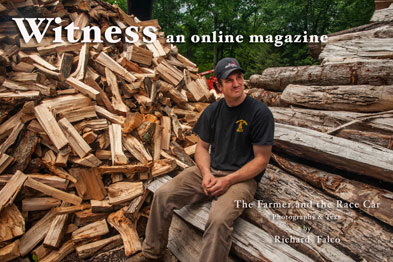
The Farmer and the Race Car
This story focuses on a farmer in a small bucolic Connecticut town whose passion as a young man became a reality through hard work and determination. Michael Sabia started a Christmas tree farm in 2005, though his passion was race cars. As his business grew, he was able to channel more energy not only into building race cars but into racing them as well. Over the years, without sponsors, his grit has made him one of the top competitors in modified dirt racing.
|
|
|
|
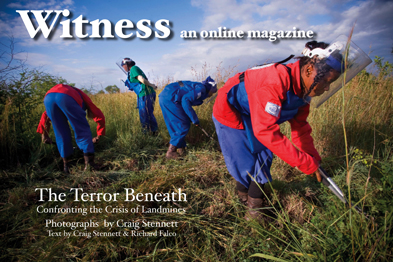
The Terror Beneath: Confronting the Crisis of Landmines
Today it is estimated that there are over 110 million antipersonnel mines in seventy countries. The majority of these countries are in the developing world which do not have resources to remove the mines or care for the tens of thousands of victims injured by the explosions. This has become a global humanitarian crisis. Approximately one million people have been killed and maimed by antipersonnel mines. This story looks at the efforts being made to resolve the problem and eliminate this hideous terror.
|
|
|
|
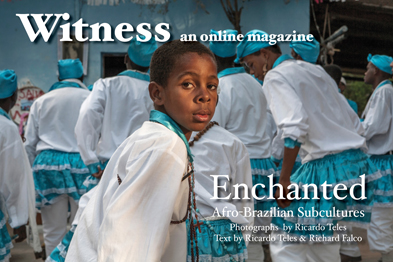
Enchanted: Afro-Brazilian Subcultures
Slavery endured for three hundred and fifty years in Brazil. It was the most perverse, long-lasting, and lucrative business in the New World. Today, approximately 50% of the total population has Afro-descendants. One of the most effective forms of resistance was the evolution of Afro-Brazilian cults and celebrations. Despite the horrors and injustices of slavery, rich new social structures developed. The diversity of these cultural and religious manifestations, illustrates the persistence and vitality of numerous subcultures that thrive in Brazil today. Born from a hybrid seed, it gave rise to the Afro-Brazilian cultural trunk that sprouted hundreds of the uniquely diverse branches.
|
|
|
|
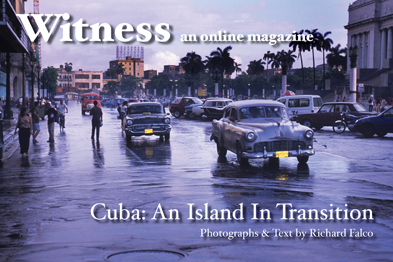
Cuba: An Island In Transition
Cuba is quickly approaching a crossroad. On December 17, 2014, President Obama and Cuba’s President Raúl Castro made the announcement that full diplomatic relations between the two countries would be restored. This decision has created a new landscape for both countries, particularly for Cuba. The last fifty years have left Cuba in a unique position. It’s development as a nation has been continually checked by the pressure of international forces and events. Internally, its culture has been determined by the persona of one man, Fidel Castro. His passing will signify the end of an era. This issue looks at the situation as the next generation of Cubans confronts a myriad of complex decisions.
|
|
|
|
|
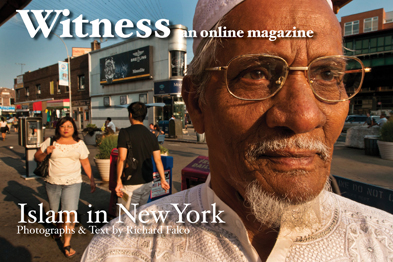
Islam In New York
Over the last two decades the Muslim community has grown significantly in New York. Islam has now become another intriguing tile that fits within the mosaic that defines the New York Metropolitan area. That said, it is not the same culture we do often associate with the Middle East. New York has always thrived on diversity. Islam has now become another component in that ever-changing landscape. This issue explores these developments and the impact it has on the metropolitan area.
|
|
|
|
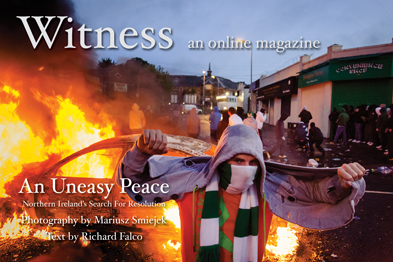
An Uneasy Peace: Northern Ireland’s Search For Resolution
The Good Friday Peace agreement of 1998 brought a great deal of hope to the residents of Northern Ireland. After three decades of violence and civil conflict, a great sigh of relief resonated throughout the islands of the United Kingdom and Ireland. However, today Northern Ireland finds itself precariously perched atop an unsteady peace. Instability continues to plague the region followed by repeated outbursts of riots and violence. The sectarian conflict that affected the two communities of Protestants and Catholics has evolved. For many, life is better, but there is no lasting peace. This story explores the reality of the present situation.
|
|
|
|
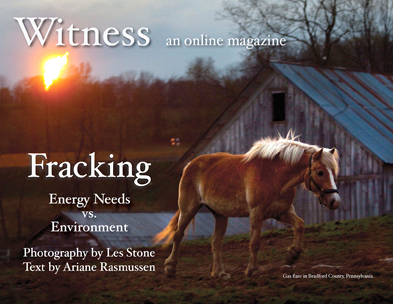
Fracking: Energy Needs vs Environment
In the United States, hydraulic fracturing, also known as fracking, has been the subject of widespread controversy for some time. This process is used to extract natural gas from underground. While the gas industry says that the extraction operations are safe, helps address the nation’s energy needs, & creates new jobs, there are also major concerns that gas-related byproducts harm the environment and those living in nearby areas. This story focuses on the complexity of the issue and a number of the people involved.
|
|
|
|
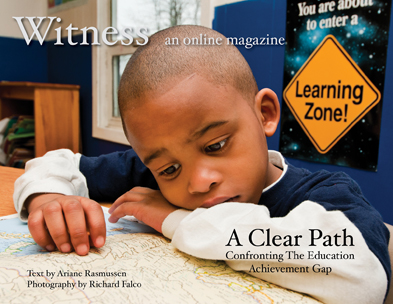
A Clear Path: Confronting The Education Achievement Gap
The “achievement gap” is the disparity in school performance between groups of students based on race, gender, and socioeconomic status. This issue looks at this ever-expanding problem in American education. The story examines the complexity of the situation and focuses on a number of programs and organizations that have positively addressed the issue.
|
|
|
|
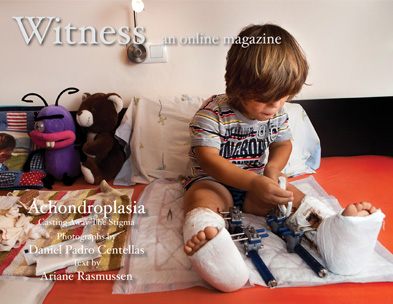
Achondroplasia: Casting Away The Stigma
Achondroplasia is the most commonly recognized form of dwarfism. Fighting against the stigma associated with being a person of short stature is still the greatest challenge two young boys, who despite their differences are like anyone else – people with hopes, that dwarves, achondroplasiac or not, have to face on a daily basis. This story focuses on fears, and dreams trying to live a life of acceptance and meaningfulness.
|
|
|

|
Urban Friars
This story focuses on a group of Franciscan friars living and working in the Bronx. They live according to their vows of poverty, chastity, and humility, attending to the needs of the most forgotten in one of New York City's poorest neighborhoods. They have become an integral part of this South Bronx community. They view their community work with great pragmatism. "We are not here to create converts or initiate great change," says Brother Walt, "That is not what St. Francis would want us to do. We do what we can, to the best of our ability." Amidst the noise and at times chaos of the city, the brothers move about the neighborhood, contributing where they can. It is a mission of quiet solemnity and peace.
|
|
|
|
|
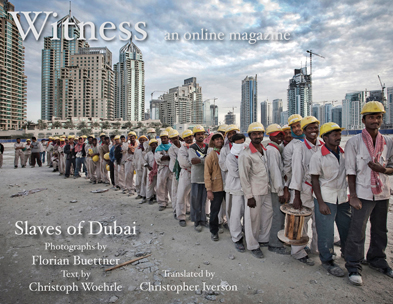
Slaves Of Dubai
Construction in the United Arab Emirates is increasing at a fever pitch. This is made possible by the labor of scores of foreign workers. The story focuses on the exploitation of this labor force in one of the richest countries in the world. We witness the explosive growth of a nation at the expense of people who are not even its citizens. |
|
|
| |
|
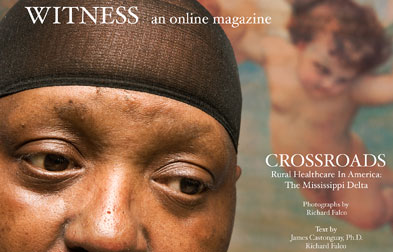
Rural
Healthcare In America – The Mississippi Delta
Healthcare has become a paramount concern for Americans.
Providing all Americans with access to quality healthcare
is one of the most complicated social policy issues of our
time. In the United States, the divide is not just between
rich and poor or the insured and uninsured. It is also about
where you live –- in an urban or rural area. This
story follows the doctors, nurses, community organizers
and patients who are part of an innovative and well-planned
healthcare network in the Mississippi Delta. The Delta is
an area where the need for quality rural healthcare is great.
The project presents an approach to community care that
can provide a model for other parts of the country.
Link to Documentary Film |
|
|
|
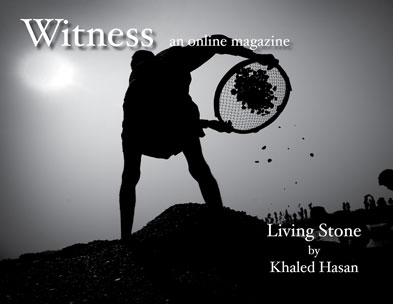
Living Stone
The story focuses on the exploitation of men, women and children working in the stone crushing industry in Jaflong, Bangladesh. More than 10,000 people work as stone laborers. The uncontrolled industry is harming the environment, endangering the health of workers, creating sound and air pollution, and shrinking the biodiversity of the region. |
|
|
|
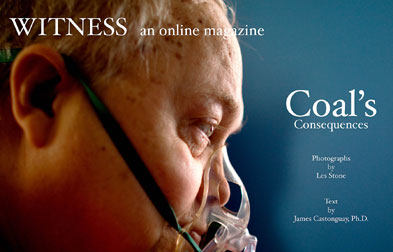
Coal’s Consequences
Coal generates half of America’s electricity. This
issue focuses on coal production, energy needs and the impact
production has on the culture and healthcare on the communities
that produce it. This story takes place in West Virginia
and revolves around communities that have a unique historical
link to coal. The issue looks at global production and usage,
new mining techniques, the increase in Black Lung Disease,
the medical and benefit programs created to help disabled
miners and the legal system that works against them |
|
| |
|
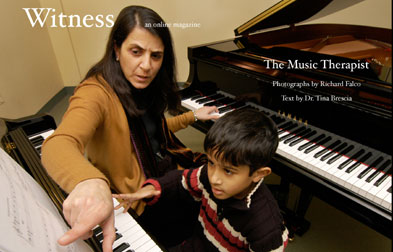
The Music Therapist
This issue focuses on a music therapist working with Music
Therapy Institute in White Plains, NY. The story follows
Lisa’s Sandagata helping people with disabilities
find a way to communicate and connect to their world. The
idea of using music for healing is not a new one. Music
therapy is used to treat people with AIDS, Alzheimer’s,
autism, developmental disabilities, mental health disorders,
medical and surgical patients, hospice care patients, William’s
Syndrome, and the needs of veteran’s with post-traumatic
stress disorder. It is estimated that over 1.5 million people
have received music therapy services in the U.S. in the
past year. |
|
| |
|
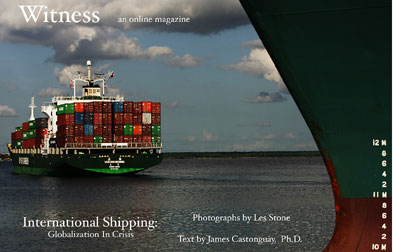
International
Shipping: Globalization In Crisis
Roughly ninety percent of the world’s goods are transported
by sea with over seventy percent as containerized cargo.
This process was streamlined in the 1950s when companies
developed an intermodal system using standardized containers
that facilitated efficient transfer between trucks, ships
and trains through specialized terminals. International
container shipping has made the
world smaller and the world economy bigger, but not without
problems. This story illuminates the complexity of the situation. |
|
|
|
|
|
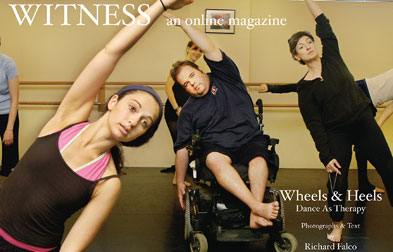
Wheels and Heels: Dance As Therapy
This issue focuses on a group of professional dance instructors who have chosen to work with the disabled. The program gives this underserved, special needs population the opportunity to experience the joy of moving to music while developing strength, flexibility and self-confidence. It is called Wheels and Heels. In it, stand-up dancers work together with wheelchair dancers to create a unique and beautifully choreographed dance piece. An important goal for the project is to reduce the barriers confronting people with disabilities and to encourage the non-disabled community to redefine the meaning of ability. |
|
|
|
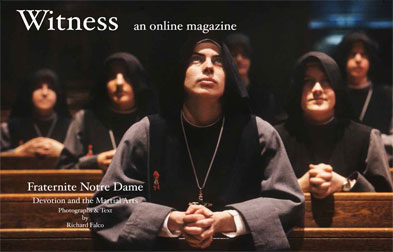
Fraternite Notre Dame: Devotion and the Martial Arts
In 1991, a group of French nuns arrived in New York to open a mission. All of them were from the Order of Fraternite Notre Dame. No one spoke English. Their first plan was to establish a soup kitchen for the poorest of the poor. They chose a storefront in Spanish Harlem and started working. Within a short period of time, they arranged to have food that was to be thrown out at the end of the day because it was not sold by the bakeries and restaurants donated to the mission. This was then served to the visitors of their kitchen. Other activities included dispensing food to the homeless and caring for AIDS patients at nearby hospitals. A warm and friendly relationship has developed with the surrounding community. Shortly after their arrival, they began to study martial arts. The thought of using it on the streets to protect themselves was not the reason they began training. It was purely for exercise and recreation. “Even though we study the martial arts, it does not in any way take away from our religious calling,” says Sister Marie Francesca. “Our commitment to making a difference to those in need always comes first.”
|
|
|

|
Unwed Teen Moms - A Way Forward
Teenage mothers face significant challenges, especially when they lack job skills and a solid educational foundation. Research shows that young women in these circumstances often struggle for the rest of their lives to escape poverty and improve conditions for their children. This issue focuses on a program launched in Ohio that aims to address these challenges and provide teen mothers with the support they need to build better futures.
|
|
|
|
| |
|
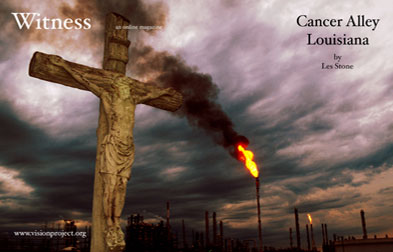
Cancer
Alley – Louisiana
In Louisiana, stretching 80 miles from New Orleans to Baton
Rouge, there lays one of the most polluted areas of the
United States. Because of the dense cluster of oil refineries,
petro-chemical plants and other chemical industries, this
area is known as Cancer Alley. Designated as an enterprise
zone, loose oversight has enabled industry to release into
the environment extremely toxic materials. Recent studies
have found that the entire population of this region has
been exposed to thousands of toxic chemicals and very little
is being done to clean up the mess. Cancer and respiratory
problems are widespread. Greenpeace has labeled Cancer Alley
a Global Toxic Hotspot. |
|
|
|
| |
 |
An
Affirmation of Life – Summer Camps for Children with
HIV
The burden of AIDS falls heavy on anyone who carries the
HIV virus. For children, the burden is far more tragic.
Their life is usually a solitary one confined to their immediate
family and caregivers. This story focuses on two summer
camps, one in New York and another in California, that gives
these children the opportunity to have some fun and be just
kids. |
|
|
| |
| |
 |
| |
| |
| |
|
|













